Thursday, August 21, 2008

CARD-MRI NI DR. ALIP NG SAN CRISTOBAL, 2008 RAMON MAGSAYSAY AWARDEE FOR PUBLIC SERVICE

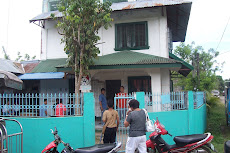
KARANGALAN NG SAN CRISTOBAL, KARANGALAN NG LUNSOD - Ang Center for Agriculture and Rural Development Mutually Reinforcing Institutions (CARD-MRI) na itinatag ni Dr. Jaime Aristotle B. Alip ng Brgy. San Cristobal ay ang itinanghal na 2008 Ramon Magsaysay Awardee for Public Service dahil sa katangi-tanging pagseserbisyo sa sektor ng micro-financing. Si Dr. Alip at ang kanyang mga magulang ay nagmula sa Barangay San Cristobal at isa sa mga naunang lahing naglingkuran upang maisakatuparan ang kawikaang: Kayang-kaya pag samasama at nagkakaisa.

DR ARISTOTLE ALIP - Founder and MRI Managing Director, Center for Agriculture and Rural Development (CARD) Mutually Reinforcing Institutions; CARD Bank, CARD NGO, CARD MBA (Insurance), and CARD Training Institute

The Center for Agriculture and Rural Development (CARD) is a microfinance institution that comprises both an NGO and a Bank, and is a replication of the Grameen Bank lending methodology.

CARD is the first NGO in the Philippines to transform into a bank with a total outreach of more than 301,000 poor families (focused on women clients) with an outstanding portfolio of US$20 Million.

CARD MRI has a total of 307 offices in the entire country with more than 1,500 staff.

CARD is a pioneer institution not only in microfinance but also in micro-insurance insuring more than 1,400,000 poor individuals.

CARD MRI has a total asset of US$ 30Million with liaison office in Cambodia and Partnership program in Hanoi, Vietnam

Some of his awards received:

2007 Most Outstanding Alumnus Award, UPLB – for being at the forefront of rural development in the public and private sectors

Most Distinguished Alumnus Award, UPLB – in recognition of the embodiment of what the Oblation means in thought, word, and deed

Ernst & Young Social Entrepreneur of the Year Philippines Award 2006 – for his contribution towards poverty alleviation

People Power People Award in 2005 for leadership and CARD’s work in microfinance.

Global Excellence Award in Microfinance (NY, USA, 2003)

Launched and spearheaded the national poverty alleviation program (KALAHI) when he was Undersecretary for Operations of the DWSD (Sept 2002-Oct. 2003), with US$100 M funding from the World Bank

Responsible for the Beneficiaries Development Program of the Dept. of Agrarian Reform when he was Assistant Secretary in April 1996 to June 1998.

Has served in the various key positions in the Philippine Government with commitment to the cause of the poor but pursues such mission with the highest professional standards and ethics.

Has affiliations with microfinance associations

Has written and published major articles on credit policy, community resource security and sustainable livelihood and the sustainability of credit for and by the poor.

2008 RAMON MAGSAYSAY AWARDEE FOR PUBLIC SERVICE
Center for Agriculture and Rural Development – Mutually Reinforcing Institutions
(of DR. JAIME ARISTOTLE B. ALIP)

DR. JAIME ARISTOTLE ALIP, NAMUMUKOD NA SAN PABLEÑO


San Pablo City – Kaugnay ng pagdiriwang ng ika-68 anibersaryo ng pagkakatatag ng Lunsod ng San Pablo, si Dr. Jaime Aristotle Alip ay napiling isa sa The Outstanding San Pableños.

Siya ay pinarangalan ng pangasiwaan ng Lunsod sa isang pagtitipon sa Coco Palace Hotel and Restaurant noong Martes ng gabi, kasama ng iba pang maipagmamalaking anak ng pamayanang kilala bilang Lunsod ng Pitong Lawa.

Si Dr. Alip ang nagsimula noong 1986 ng isang micro finance project sa Lalawigan ng Laguna na tinatawag na Center for Agricultural and Rural Development (CARD) upang makapagkaloob ng walang panagot na pautang na umaabot sa P2,000 upang maitulong sa mga mahihirap na mamamayan na matulungan ang kanilang sarili.

Ngayon, ang CARD Group of Companies ay 160,000 kliyente o natutulungan na ang nakararami ay kababaihan na matatagpuan sa lahat ng sulok ng bansa.

Umaasa si Alip na bago sumapit ang taong 2009 ay makakatulong na sila sa 1 milyong sambahayan sa pamamagitan ng pagpapahiram ng puhunan na halos ay walang patong na tubo.

Ang kanilang mga kliyente ay sinasanay sa wastong pagbibili ng ano mang artikulo ng kalakalang kanilang malilikha, pangangasiwa ng kanilang munting negosyo, pagpapaunlad ng produktong sandigan ng kanilang hanapbuhay at iba pang kamalayan tungo sa ikapagtatagumpay ng pamumuhunan.

Si Dr. Alip ay tumanggap na ng mga pagkilala at pagpapahalaga mula sa mga lider ng mga papaunlad na bansa dito sa Asia na nakikinabang sa kanyang micro-financing project, at ang kauna-unahang pagkilala sa kanya ay kaloob ni Pangulong Corazon C. Aquino. (THE WEDNESDAY HERALD, May 7-13, 2008, vol. XXVII No. 36)

Tuesday, August 19, 2008

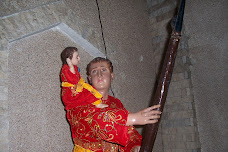
ST. CHRISTOPHER'S MARTYRDOM


Saint Christopher is a saint venerated by Roman Catholics and Orthodox Christians, listed as a martyr killed in the reign of the 3rd century Roman emperor Decius (reigned 249-251).

The Eastern Orthodox Church venerates Saint Christopher on May 9. the Tridentine Calendar allowed a commemoration of Saint Christopher on 25 July only in private masses. The restriction was lifted after (see General Roman Calendar as in 1954). While the Roman Catholic Church still approves devotion to him, listing him in the Roman Martyrology among the saints venerated on 25 July, it removed his feast day from the Roman Catholic calendar of saints in 1969. At that time the church declared that this commemoration was not of Roman tradition, in view of the relatively late date (about 1550) and limited manner in which it was accepted into the Roman Calendar.

According to legend, during the reign of the Emperor Decius, a man named Reprebus or Reprobus (root of English word “reprobate”) was captured in combat against tribes to the west of Egypt and was assigned to the numerus Marmaritarum or “Unit of the Marmaritae” which suggests an otherwise-unidentified “Marmaritae” Berber tribe of Cyrenaica. He was of enormous size and terrifying demeanour. Reprebus accepted baptism and began to preach the faith. Eventually, the governor of Antioch (or in some versions the Emperor himself) decreed that Reprebus was to be executed for his faith. He miraculously survived many attempts at execution, eventually permitting himself to be martyred after converting multitudes. His body was then taken back to Alexandria by Peter of Attalia.

Monday, August 18, 2008

ST. CHRISTOPHER: HISTORICAL VERIFIABILITY


The first hurdle is the idea that he was a dog-headed cannibal. This can be understood in the light of the practice of the time, which was to describe all people outside the “civilized” (Greco-Roman-Persian) world as cannibal, or dog-headed albeit metaphorically. A later generation could then mistake a metaphor or hyperbole for a literal statement.

The man in question is also said to have been assigned to a military unit made up of Marmaritae. The Marmaritae were the independent tribes of Marmarica (now in modern Libya), who would have pushed to the frontier region after Roman settlement. Since he was from a frontier tribe, describing him as being from the land of dog-headed people would have been a literary convention of the day.

The various miracles attributed to him could be explained as ordinary embroidering typical of hagiography, especially regarding saints of the early centuries of Christianity.\

Finally, we have the statements that he was killed in Antioch and his body taken elsewhere by a bishop. St. Christopher could not have been killed in the fourth year of the Emperor Decius, as Decius only reigned for two years, however, before ascending to the throne of the Eastern Roman Empire, Maximinus was known as “Daza” before rising to power. Unfortunately, there is no record of a visit to Antioch by Maximinus in the fourth year of his reign (308). It is, of course, possible that St. Christopher was executed in Antioch during this year by the order of a lower authority; a personal trial before one of the Caesars could be a later embellishment.

Unfortunately, none of this information permits identification of the actual man. CHRISTOPHER is simply greek for “CHRIST-BEARER”, and it can refer, as in the Eastern tradition and in Jacobus de Voragine’s explanation of the name, to St. Christopher’s willingness to “TAKE UP THE CROSS” – a common metaphor for converting to Christianity . “Reprobuz” simply means “wicked person”, so saying that “Reprobuz” became CHRISTOPHER amounts to saying “A WICKED PERSON BECAME A CHRISTIAN”. Furthermore, no place claims to be the burial site of St. Christopher, which would be very unusual for a martyr.

It has been speculated that St. Christopher could be the same man known as “Saint Menas” among the Copts, for whom a 4th century burial site is known but has no verifiable details about his life or martyrdom attached to him. However, there is no conclusive link.

THE GOLDEN LEGEND OF ST. CHRISTOPHER

According to the account in the Golden Legend by Jacobus de Voragine,[6] Christopher was a Canaanite 12 cubits (18 feet) tall and with a fearsome face. While serving the king of Canaan, he took it into his head to go and serve the greatest king there was. He went to the king who was reputed to be the greatest, but one day he saw the king cross himself at the mention of the devil. On thus learning that the king feared the devil, he departed to look for the devil. He came across a band of marauders, one of whom declared himself to be the devil, so Christopher decided to serve him. But when he saw his new master avoid a wayside cross and found out that the devil feared Christ, he left him and enquired from people where to find Christ. He met a hermit who instructed him in the Christian faith. Christopher asked him how he could serve Christ. When the hermit suggested fasting and prayer, Christopher replied that he was unable to perform that service. The hermit then suggested that because of his size and strength Christopher could serve Christ by assisting people to cross a dangerous river, where many were perishing in the attempt. The hermit promised that this service would be pleasing to Christ.
After Christopher had performed this service for some time, a little child asked him to take him across the river. During the crossing, the river became swollen and the child seemed as heavy as lead, so much that Christopher could scarcely carry him and found himself in great difficulty. When he finally reached the other side, he said to the child: "You have put me in the greatest danger. I do not think the whole world could have been as heavy on my shoulders as you were." The child replied: "You had on your shoulders not only the whole world but him who made it. I am Christ your king, whom you are serving by this work." The child then vanished.
Christopher later visited the city of Lycia and there comforted the Christians who were being martyred. Brought before the local king, he refused to sacrifice to the pagan gods. The king tried to win him by riches and by sending two beautiful women to tempt him. Christopher converted the women to Christianity, as he had already converted thousands in the city. The king ordered him to be killed. Various attempts failed, but finally Christopher was decapitated.

ST. CHRISTOPHER: VENERATION AND PATRONAGE


The Eastern Orthodox Church's hymn for the 9 May feastday of St Christopher refers to elements of his story found also in the Western Golden Legend:

Christopher, Great Martyr (Kontakion Tone 4): Your physique was overwhelming and your face horrifying. / You willingly suffered trauma from your own people. / Men and women tried to arouse consuming fires of passion in you, / but instead they followed you to your martyrdom. / You are our strong protector, o great martyr Christopher!
Relics and medals
After having been held in Constantinople, the relics and the head of the saint were moved to the island of Rab in Croatia. When Normans tried to invade the islands and besieged the city, its inhabitants placed the saint's relics on the city walls. Miraculously, the winds changed and the bows and ships were blown away from the city. One of the city's largest medieval squares is named after the saint.
Christopher is one of the Fourteen Holy Helpers, and the patron saint of travellers. Medallions with his name and image are worn to show devotion to a certain saint and ask for that saint's prayers. They are frequently displayed in automobiles. In French a widespread phrase for such medals is "Regarde St Christophe et va-t-en rassuré" ("Look at St Christopher and go on reassured"); Saint Christopher medals and holy cards in Spanish have the phrase "Si en San Cristóbal confías, de accidente no morirás" ("If you trust St. Christopher, you won't die in an accident"). In Austria an annual collection for providing vehicles for the use of missionaries is taken up on a Sunday close to the feast of Saint Christopher, asking people to contribute a very small sum of money for every kilometre that they have travelled safely during the year.

Christopher has always been a widely popular saint, being especially revered by athletes, mariners, ferrymen, and travellers. He is revered as one of the Fourteen Holy Helpers. He holds patronage of things related to travel and travellers: people who carry things; against lightning; against pestilence; archers; automobile drivers; bachelors; boatmen; bookbinders; epilepsy; floods; fruit dealers; fullers; gardeners; hailstorms; for a holy death; truck drivers; mariners; market carriers; porters; sailors; surfers; toothache; transportation; and transportation workers.

BARANGAY COUNCIL IN SESSION


Dalawang beses kada buwan ay isinasagawa ng konseho ng Barangay San Cristobal ang regular na pagpupulong upang higit na matalakay at maisagawa ang mga proyekto at programang inilaan sa higit pang kaunlaran ng barangay. Araw-araw naman ay halinhinan ang mga kagawad at ang Punong Barangay Benjamin "Benbong" Felismino sa pamamahala at pagpapatakbo ng mga gawain at tungkulin sa Gusaling Pambarangay ng San Cristobal susi upang madaling madama ng mga kabarangay ang serbisyong publikong inilaan.